
Community Lunch: February
What we ate for lunch at Platt Fields Market Garden in February via Blue Apron
by Katie Hourigan, our Head Chef & previously our Head Baker
Friday 6th
Today is the first community lunch to be held at Platt Fields since before Christmas. The garden was closed for January, and I had spent the month in India with Bruno. It is good to come back to the garden full of people. There is kale, and little else, growing. We use it in two ways.
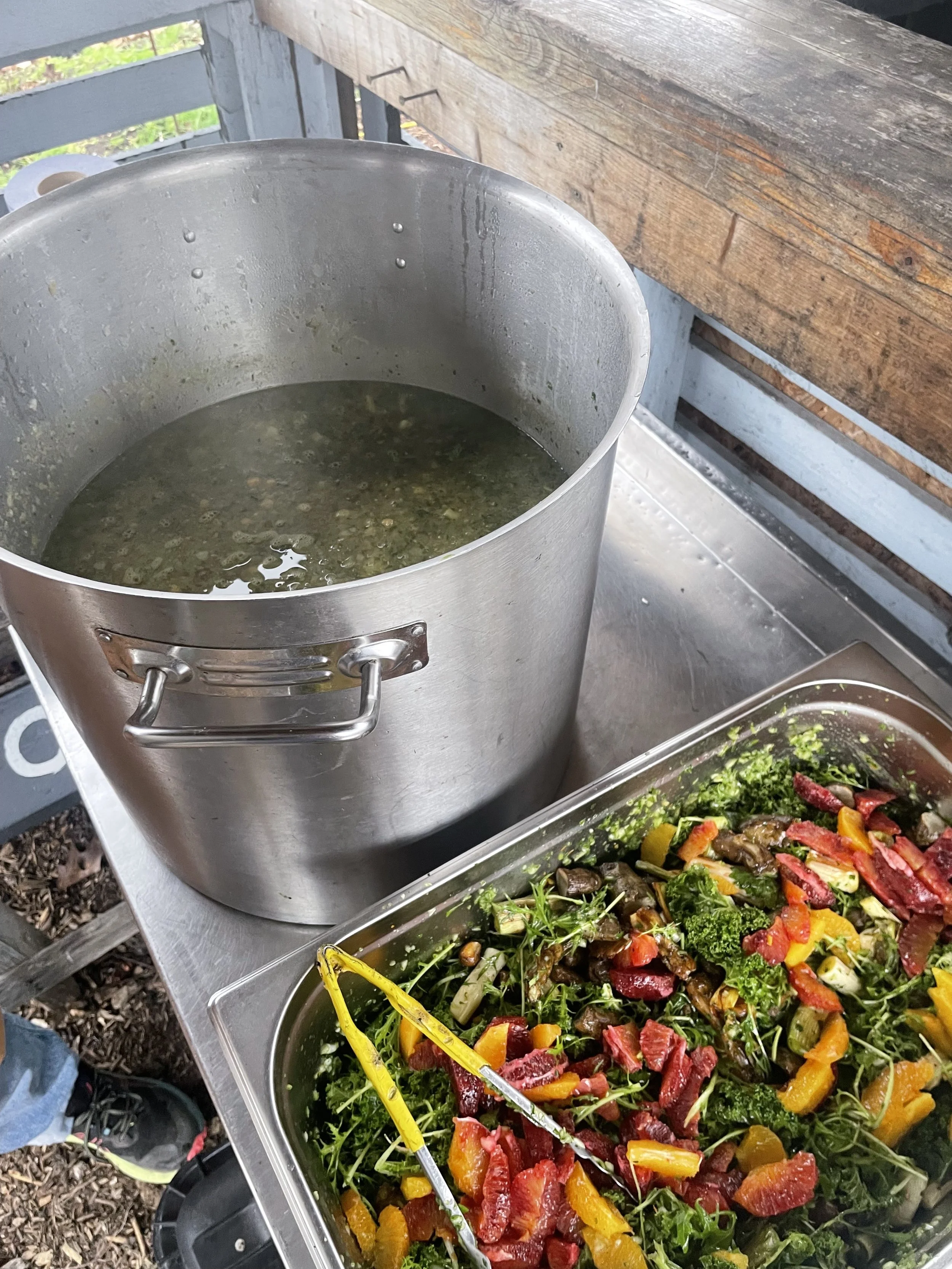
Chickpea and kale bkeila stew
Ottolenghi describes bkeila as: ‘a Tunisian Jewish condiment made by cooking lots of spinach in lots of oil for many hours, leaving you with a very dark, intense paste‘.His butter bean, potato, and bkeila stew is a recipe I have cooked for years, that calls for the dense bunches of parsley and coriander you can buy in bulk at the Kurdish supermarket. The soup we end up with is nowhere close to a true bkeila. It simmers for maybe an hour, and uses kale blitzed to a pulp, rather than spinach, as that is all that we have to hand in the garden. But it is sweet from the cinnamon, and mineral from the kale, in a way that feels familiar to the original.
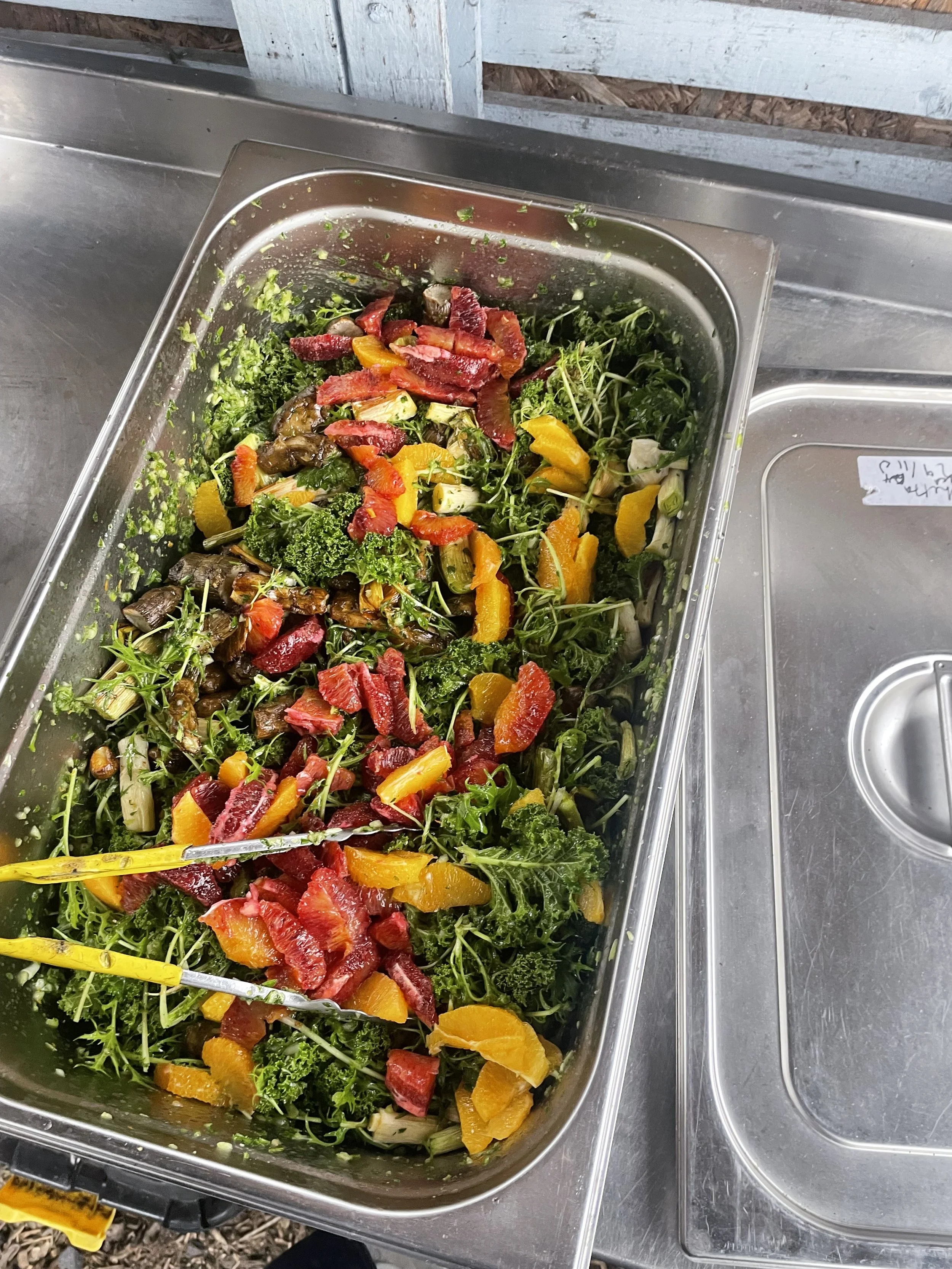
Kale, mizuna, blood orange and Jerusalem artichoke salad.
The artichokes are funny little things, knobbly and unassuming. They require a good scrubbing in the sink, as the mud gathers and settles around their pink eyes. More kale, a simple dressing, and probably too much vinegar. Frills of mizuna from beneath the blue mesh net. The blood oranges are a real treat, ordered from Organic North ahead of the upcoming seed swap. We have been allocated a little extra budget from MIF, and so I order a crate as a treat, knowing that they will stretch. A handful of the oranges are segmented by Guyeon, who is using the garden as a case study for her pHD with the Sustainable Consumption Institute at the university. Guyeon gives her time and attention to this task, and it is undoubtedly worth it - properly rid of the pith, the red and orange flesh glints away.
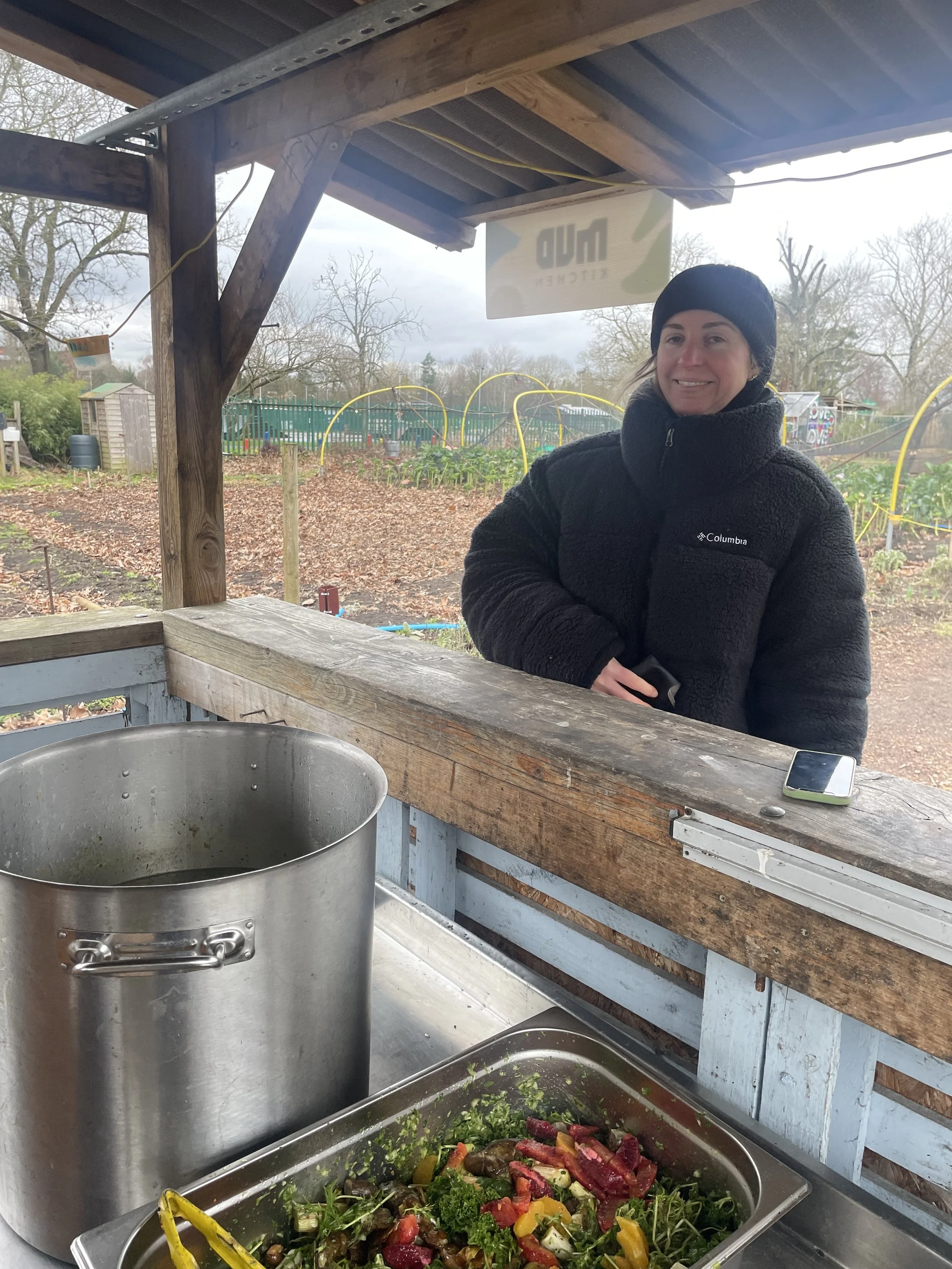
Chelsey, and our most reliable pot
February 13th
It is Friday 13th, but it doesn’t feel like an unlucky day. Today we trial our new formal system of bringing volunteers into the kitchen. Garden volunteers have always given the kitchen masses of help: peeling potatoes on benches, stripping mint leaves from the stalks, washing the grit out of leeks and setting them at the door. However we have decided to give the process a little more structure. There is now a Whatsapp group with over 80 members, where I write a weekly poll to allocate sign-ups. We have started small, only asking for four helpers. In the summer months, we will easily set more volunteers to work at the outdoor kitchen, but at the moment, it is too cold to do so. There is also not much produce in the garden to be processing. In the summer months this will be a different story - a race against rot.
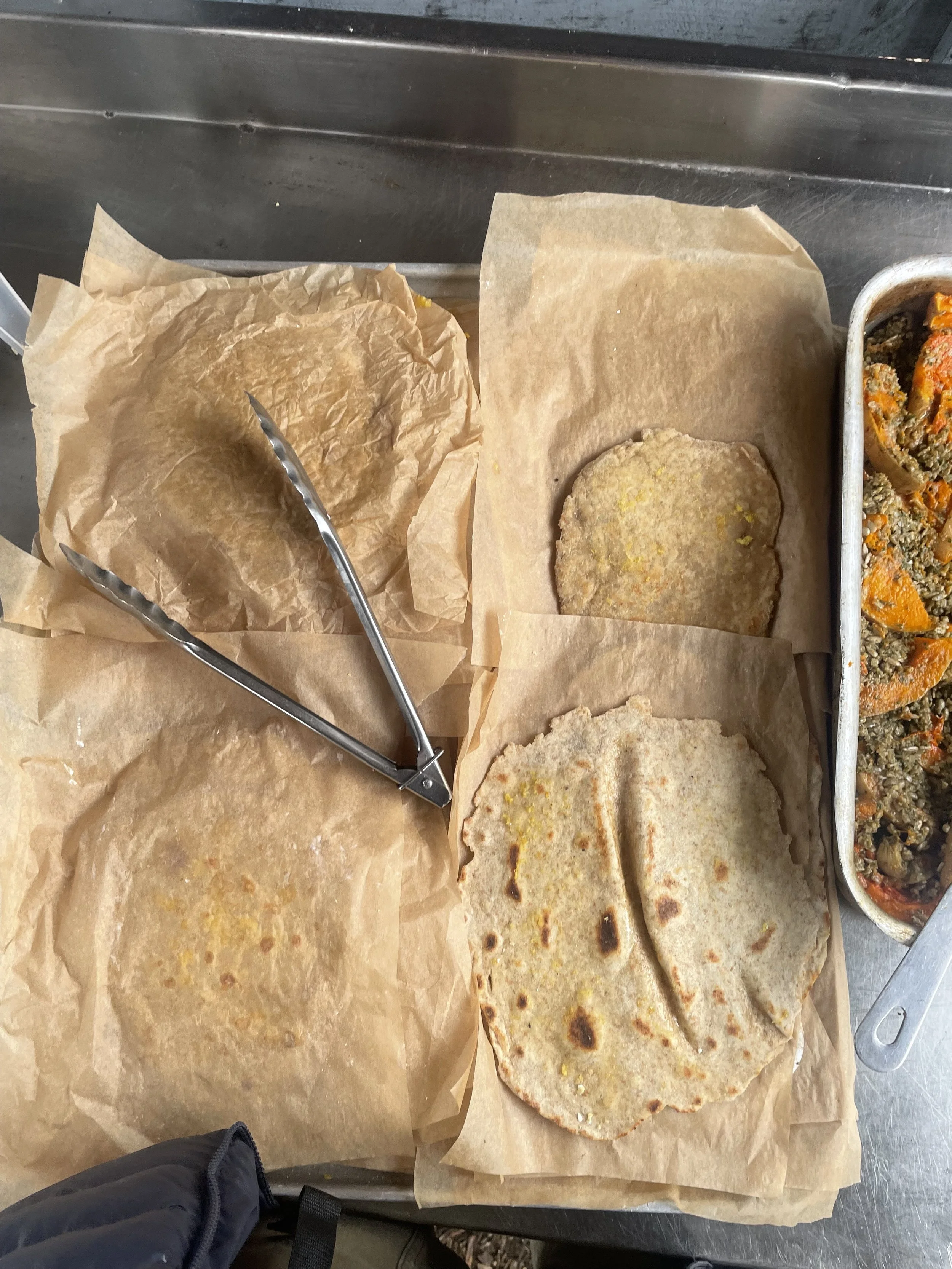
Spelt flatbread
There has been a sack of wholemeal spelt in the dry store for as long as I can remember. It needs using up, and I am excited about the prospect of having five sets of hands in the kitchen today instead of just one. We make a very simple flatbread dough of flour, water, yeast, salt, and place it on top of the oven to help it along. I should have really gotten started with the dough first thing. It is too cold in the kitchen to get it moving for a while. Once the dough has risen, we form a production line. The first volunteer divides the dough with the sharp edge of a scraper and shapes the pieces on the bench into tight balls. The next uses a rolling pin to roll out the balls to the thickness of a pound coin, and lays them on slips of greaseproof to my right. I dry fry the breads on the plancha, and use the fish slice to slap them onto the tray next to me, where the fourth and final volunteer brushes them with oil steeped in garlic and lemon zest.
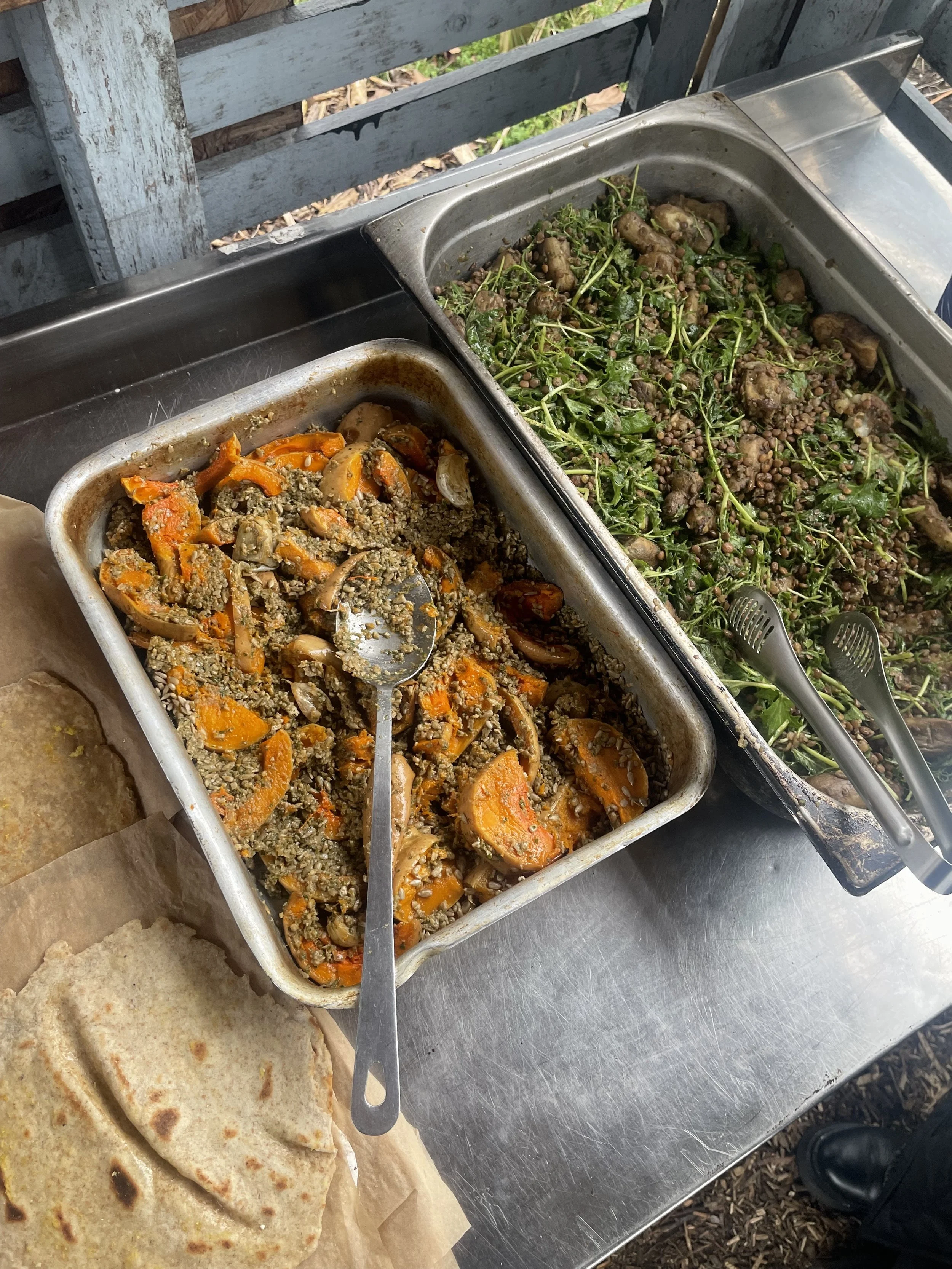
Brown lentil and mizuna salad, with roasted Jerusalem artichoke.
A mustardy dressing, lentils for bulk, and luck. In Italy, lentils are eaten on New Years Eve, as the little round coins are said to bring prosperity and luck. As it is Friday 13th I thought we could do the same. More artichokes are dug up - what a treat.
Roasted squash, sunflower seed dressing
Leftover butternut from a catering job, roasted in half moons, and dressed in toasted sunflower seeds, minced onion steeped in vinegar, oil, and garlic.
Leek and potato soup
We blend the soup this week until it is creamy. Plenty of dark brown mustard seeds in the base. Leeks from the garden, stripped of their skins, topped and tailed by the volunteers.
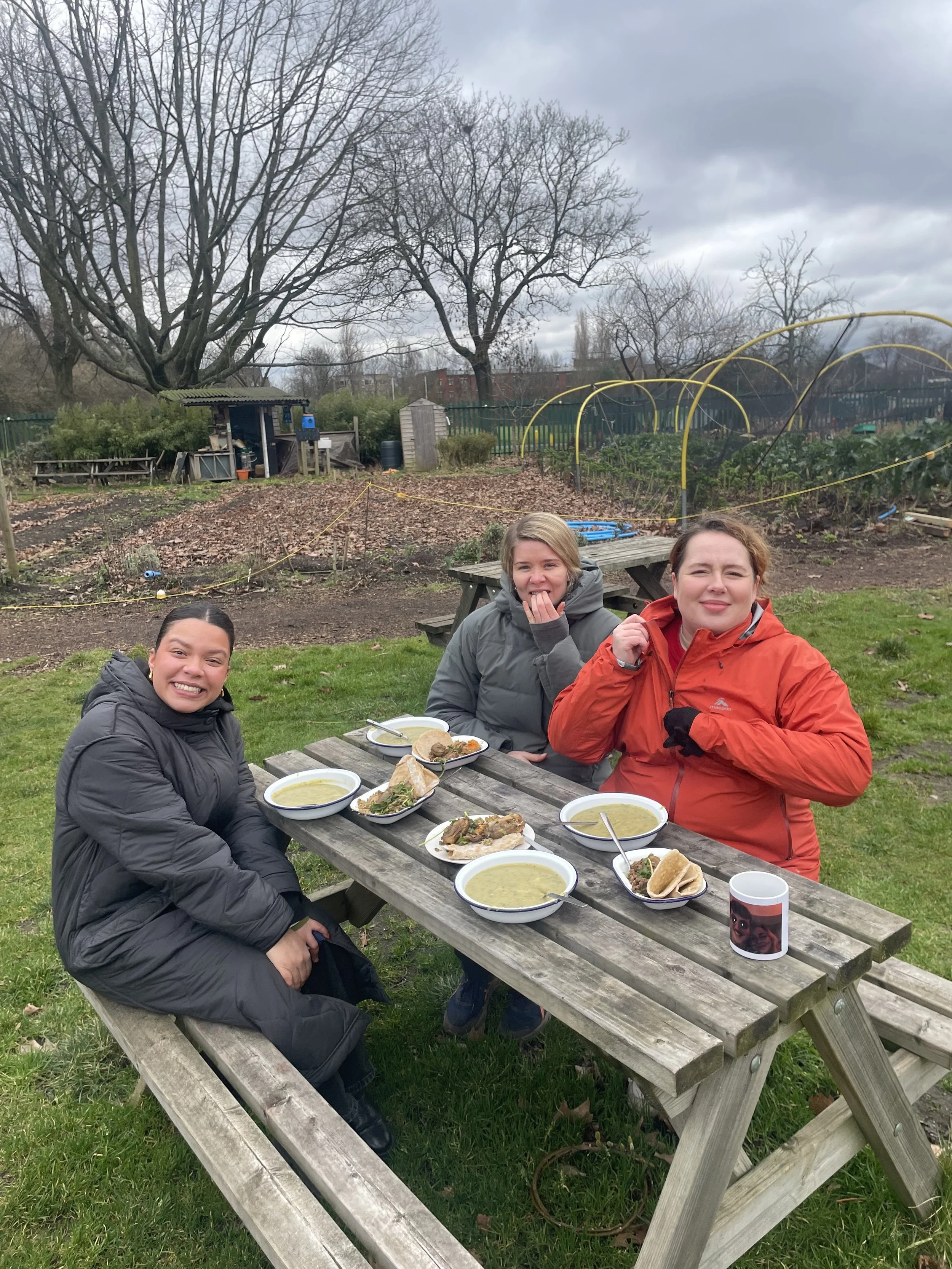
Some of the lovely kitchen volunteers!
February 20th
I have been feeling a little under the weather all week, and want to cook something simple, nourishing.
Tarka dal
We boil a pan of red split lentils for a couple of hours, and add a tarka of onion, fresh curry leaves, and fennel, mustard, coriander and cumin seeds at the last moment. I use the food processor to blitz a couple of bunches of coriander and regret it. We end up with a kind of pulp that greens the whole dal.
Cardamom rice
White onions, clove, coriander, whole peppercorns, a few fennel seeds, are frazzled in hot oil before adding the rice. I scrape the pan for extra crispy bits of rice to give myself and the kitchen volunteers.
Pickled cabbage
Finely shredded white cabbage that we pickled in December. We didn’t have time to lacto-ferment the cabbage, and so it is sharp with cheap apple cider vinegar.
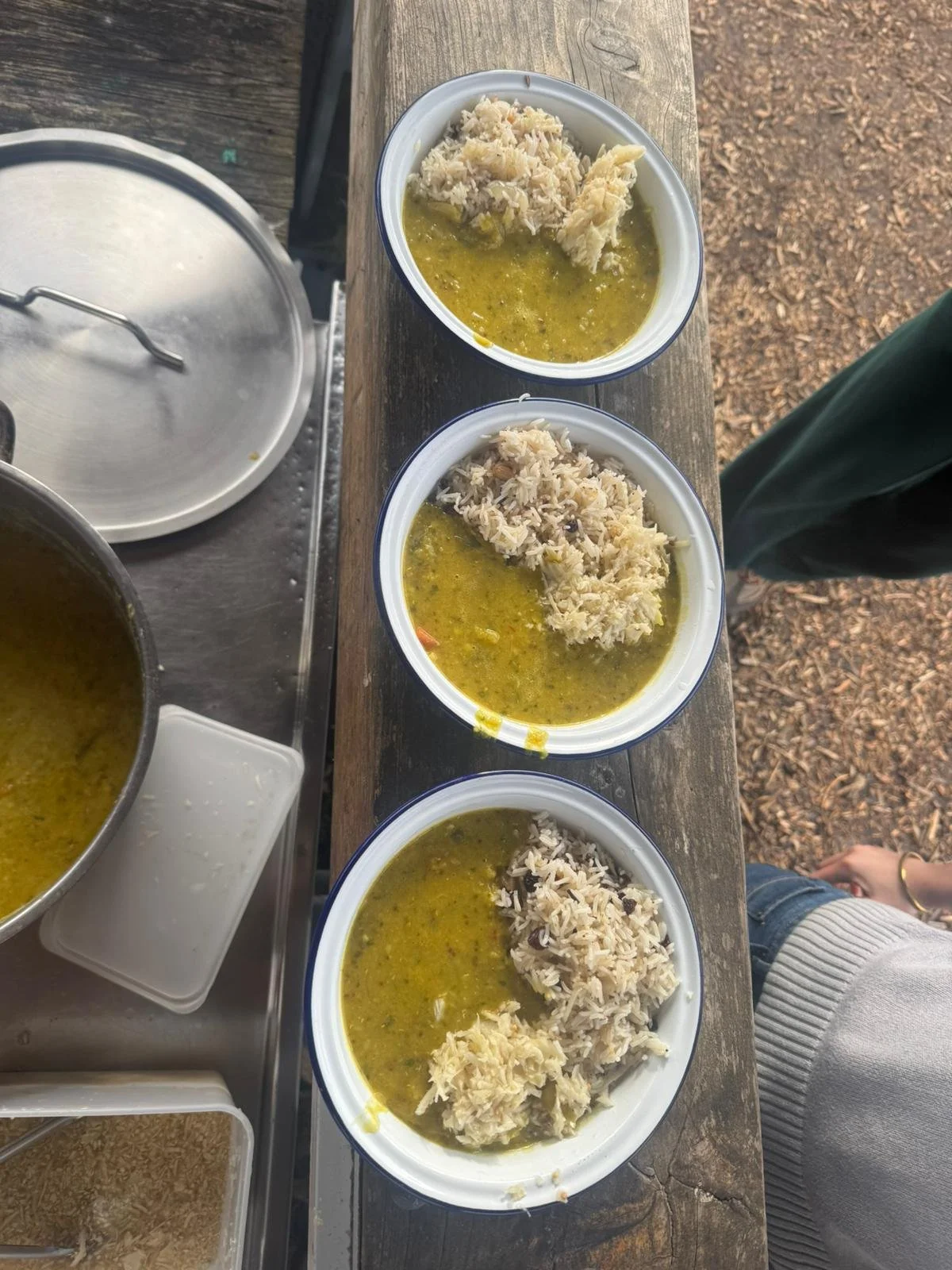
Yellow dal on a grey day
February 27th
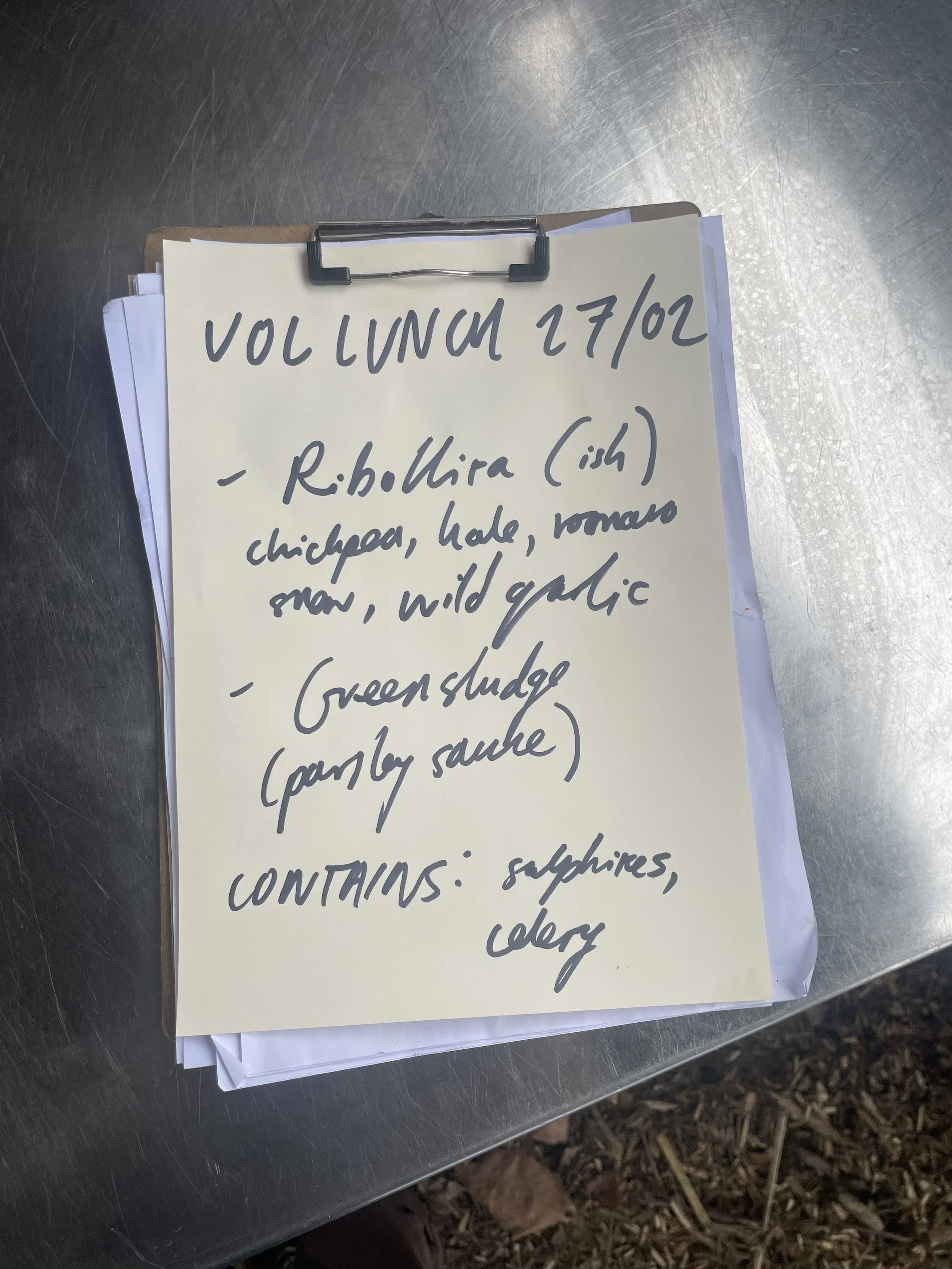
Ribollita with wild garlic
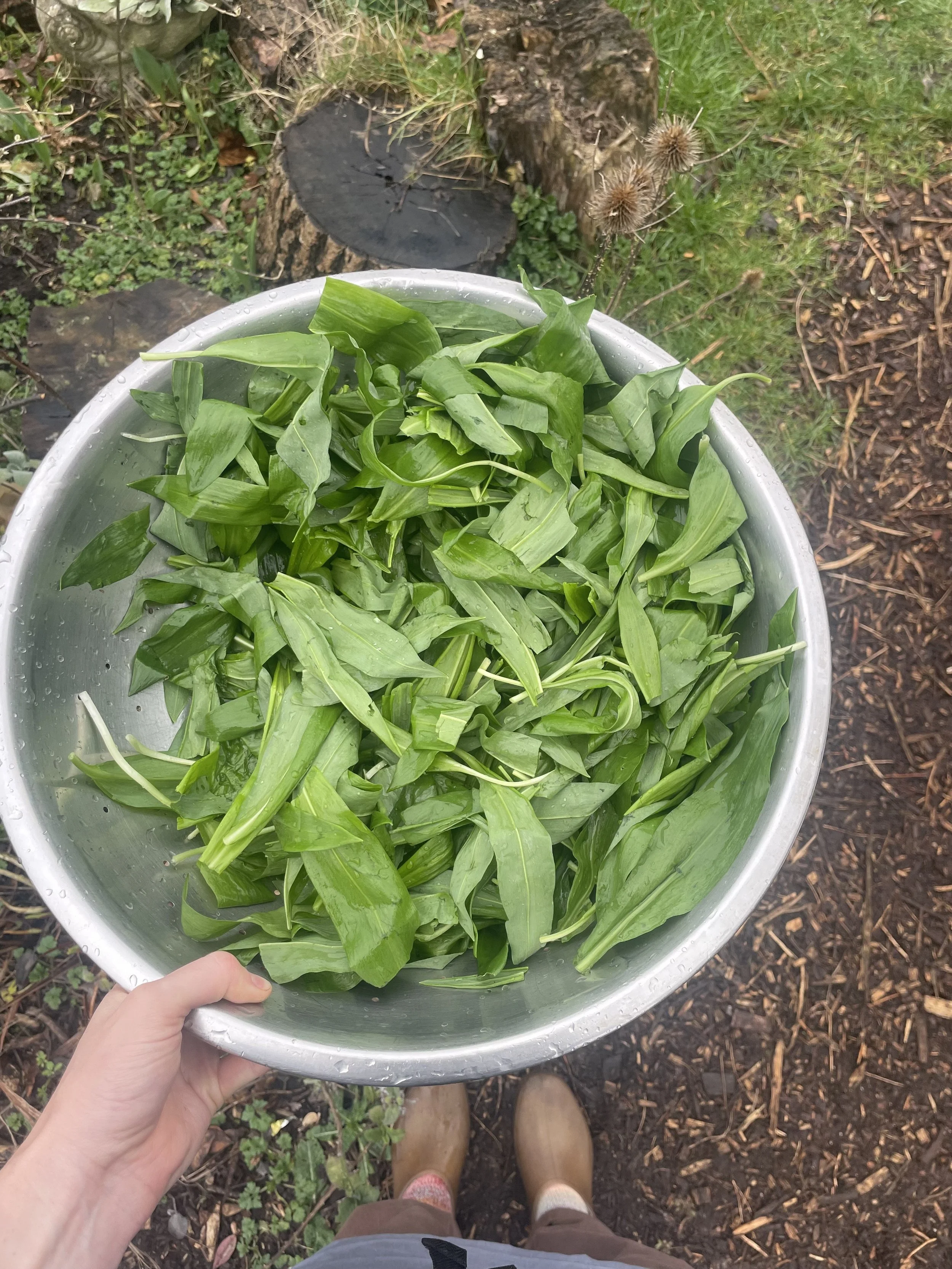
This was not a true ribollita, but followed along those lines - a soup that starts with a soffrito, is middled out with tomatos, potatos, a pulse, and finished with torn dark leafy greens. The tinned tomatoes are from Amato, the Italian wholesalers, and are wonderfully sweet. Curly kale is stripped from the stalk. We also receive the tent-like leaves of the purple sprouting broccolli, which feel slightly closer to the traditional cavolo nero, as they are darker and somewhat waxier. The first of the wild garlic is brought to the door of the kitchen by Sue. She has been picking it down at the banks of the Mersey where she walks her dog.
I attempt a farinata, but it is a massive greasy flop. The power is playing up. I had been relying on getting the oil in the base of the trays very hot, as if to make a massive yorkshire pudding, replacing the need for greaseproof. But the power trips, and I am forced to turn the oven off. The oven loses its heat, as does the oil, but I pour the batter into the trays regardless, rushing. The mass of chickpea flour cements itself to the base of the tin. I bake it for an age but the batter is simply too wet, and cannot be removed in one piece. Me and the volunteers pick at the crispy golden edges, and these are, admittedly, very nice.
Green sludge
We make a quick salsa verde with parsley, shallot, mustard, red wine vinegar, oil, salt. No anchovies, or capers, sadly, to keep things vegan and cheap.
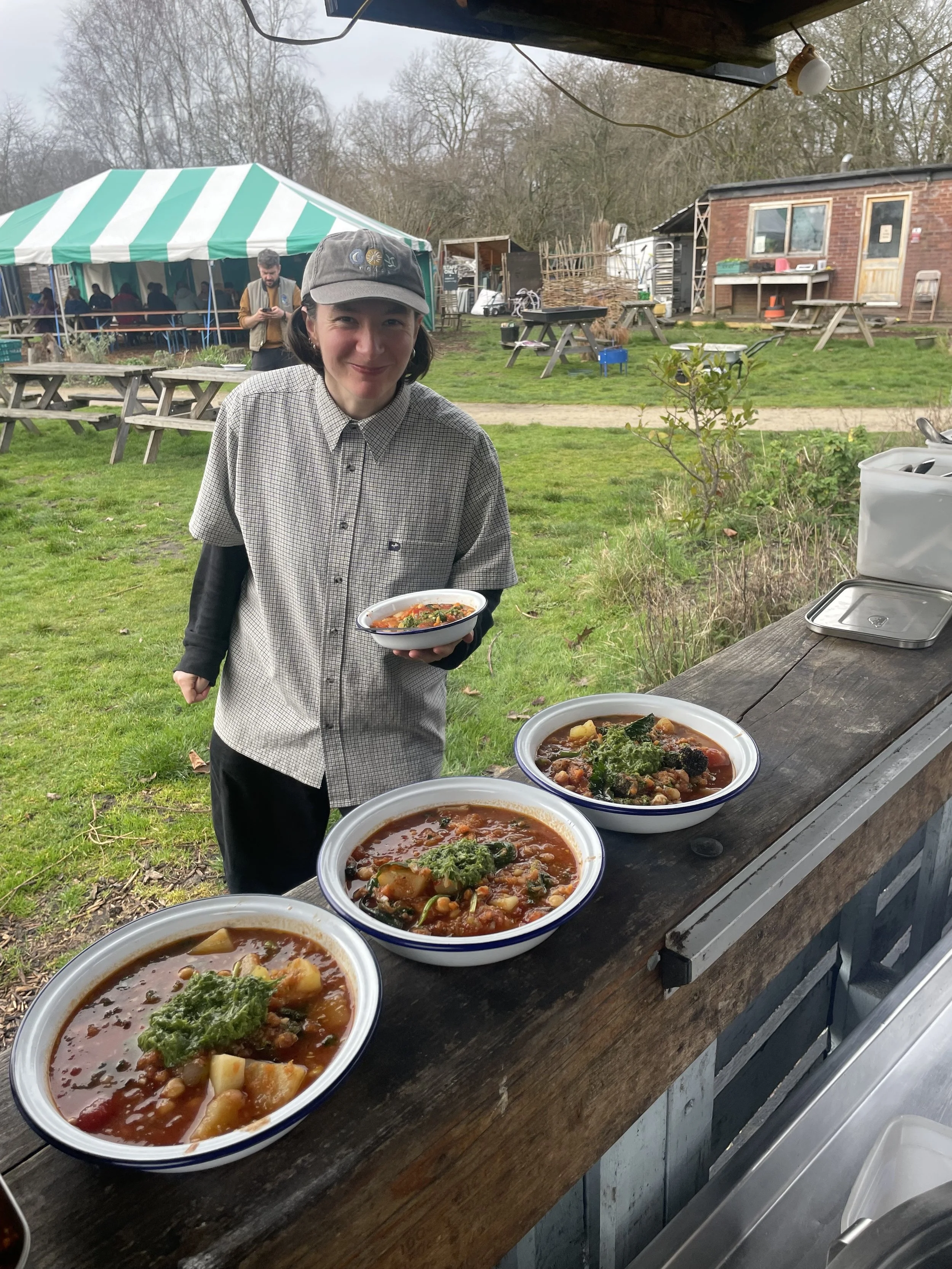
Lily and her lunch